
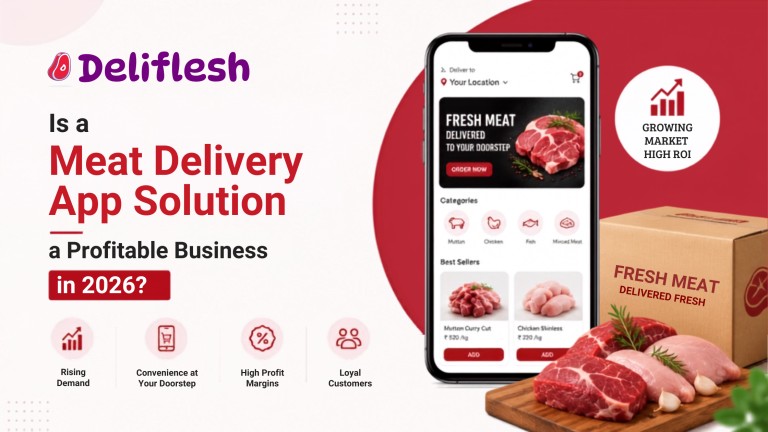
Is a Meat Delivery App Solution a Profitable Business in 2026?
Updated September 2026 · 10 min read · deliflesh.app
Yes, a meat delivery app solution is genuinely profitable in 2026, provided the business model, sourcing, and technology work together instead of in isolation. Demand for fresh, traceable meat delivered to the doorstep keeps climbing worldwide, and the global meat market is projected to grow from USD 1.43 trillion in 2024 to USD 1.71 trillion by 2033, with the rise of online retail specifically named as one of the key growth drivers. That growth signals real room for new entrants, but profitability still depends on getting the fundamentals right from day one.
The regional numbers tell an even more compelling story for founders. The India edible meat market alone is projected to grow from USD 14.72 billion in 2025 to USD 16.42 billion by 2030, and industry analysts tracking India’s online meat delivery segment specifically forecast a CAGR of around 23.6% through FY2027, driven by demand for certified, farm-to-door meat delivered within 90 to 150 minutes. Similar patterns are showing up globally, as established grocers and delivery platforms in markets like the UK have partnered directly with meat suppliers to meet rising last-mile demand.
What Makes a Meat Delivery App Solution Profitable
Margins in this space are healthier than typical grocery delivery, mainly because customers pay a premium for quality, hygiene, and convenience. However, profitability isn’t automatic, it comes from a few consistent factors working together.
- Strong supplier relationships that keep procurement costs low
- Efficient cold-chain logistics that reduce spoilage and waste
- A sticky customer base built through subscriptions and repeat orders
- Lean delivery operations, often hyperlocal rather than city-wide
- A well-built meat delivery app script that minimizes tech overhead
How Does a Meat Delivery App Solution Make Money
Most operators don’t rely on a single income source. Instead, they layer multiple revenue streams so the business stays resilient even when one channel slows down.
| Revenue Stream | How It Works |
| Delivery and convenience fees | Charged per order or per distance |
| Commission from vendors or butchers | Applies on a multi-vendor marketplace model |
| Subscription plans | Weekly or monthly recurring meat boxes |
| Premium and specialty cuts | Higher margin on organic or exotic meat |
| Value-added services | Marination, cutting, and packaging upsells |
How Much Profit Can a Meat Delivery App Solution Generate
Profit margins typically range between 15% and 30% depending on the operating model, region, and order volume. A hyperlocal single-city operation usually turns profitable faster because delivery costs stay low, whereas a multi-city rollout takes longer to break even but scales revenue faster once established. Order volumes back this up in practice, industry data has shown daily meat orders on some platforms climb from roughly 10 orders a day at launch to well over 2,000 orders a day as operations mature. Consequently, most founders start small, prove unit economics work, then expand city by city rather than launching everywhere at once.
What Factors Determine the Profitability of a Meat Delivery App Solution
Several variables directly affect the bottom line, so it helps to track them from the very first month of operation.
- Wastage rate: fresh meat that isn’t sold within its shelf life eats directly into margin
- Order frequency: repeat customers cost far less to serve than new ones
- Delivery radius: tighter zones reduce fuel and time costs per order
- Vendor pricing power: bulk sourcing agreements protect margins during price swings
- Technology efficiency: a well-optimized meat delivery app development approach cuts operational overhead significantly
Building the Right Foundation With Technology
None of the above works without dependable technology behind it. An on-demand meat delivery app clone built on proven architecture gives founders real-time inventory tracking, route optimization, and multiple payment options without the cost of building from scratch. This matters because Asia Pacific alone already holds close to 58% share of the global meat market, and platforms that move slower on tech tend to lose ground to competitors who launch faster and iterate quicker in these high-growth regions.
Additionally, reliable meat delivery app development reduces downtime, improves the checkout experience, and directly supports higher order completion rates all of which feed back into profitability.
Common Profitability Mistakes to Avoid
- Expanding to multiple cities before the first market is profitable
- Ignoring wastage tracking until margins already look thin
- Underpricing delivery fees to compete on price alone
- Skipping subscription models that build predictable recurring revenue
- Choosing a generic meat delivery app script that lacks cold-chain features
Conclusion
A meat delivery app solution can be a profitable business in 2026 when backed by the right business model, efficient operations, strong supplier partnerships, and a convenient ordering experience. Revenue streams such as commissions, delivery charges, subscriptions, advertising, and premium listings can create multiple opportunities to generate income while serving the growing demand for convenient online meat ordering.
The key to long-term profitability is choosing a solution that can adapt to your target market and scale as your customer base grows. With the right technology and business strategy, entrepreneurs can turn a meat delivery idea into a sustainable online business.
Ready to launch your own meat delivery app solution?
View the live demo to explore how the platform works, or get a free consultation to discuss your business requirements and take the first step toward launching your meat delivery platform.
Frequently Asked Questions
1. Is a meat delivery app solution a profitable business in 2026?
Yes, it can be highly profitable in 2026 when supplier costs, cold-chain logistics, and customer retention are managed well. Rising demand for fresh, traceable meat combined with subscription-based ordering gives operators multiple ways to build steady, recurring revenue over time.
2. How does a meat delivery app solution make money?
Revenue typically comes from delivery fees, vendor commissions, subscription plans, and premium cuts. Many platforms also add value-added services like marination or custom cutting, which increase order value without significantly raising operating costs.
3. How much profit can a meat delivery app solution generate?
Profit margins generally fall between 15% and 30%, depending on order volume, delivery radius, and wastage control. Hyperlocal operators often reach profitability faster since lower delivery costs and tighter inventory cycles protect margins from the start.
4. What factors determine the profitability of a meat delivery app solution?
Key factors include wastage rate, order frequency, delivery radius, vendor pricing, and technology efficiency. Businesses that track these metrics closely from launch tend to reach profitability faster than those that scale before fixing operational gaps.
5. What are the main revenue streams for a meat delivery app solution?
Main streams include delivery charges, vendor commissions, subscription boxes, premium product margins, and add-on services. Combining several streams protects the business from relying too heavily on any single source of income.
6. Why Choose DeliFlesh to Launch an Online Meat Delivery Business?
DeliFlesh offers a ready meat delivery app script built with cold-chain-friendly features, multi-vendor support, and flexible subscription tools. This lets founders launch faster with proven technology instead of building and testing everything from the ground up.
